English
 German
 French
 Russian
 Spanish
 Japanese
 Korean
 Portuguese
 Ukrainian
 Arabic
 Italian
 Afrikaans
 Albanian
 Armenian
 Azerbaijani
 Basque
 Belarusian
 Bulgarian
 Catalan
 Croatian
 Czech
Czech Danish
 Dutch
Dutch Estonian
 Filipino
 Finnish
 Galician
 Georgian
 Greek
Greek Haitian Creole
 Hebrew
 Hindi
Hindi Hungarian
 Icelandic
 Indonesian
 Irish
Irish Latvian
 Lithuanian
 Macedonian
 Malay
Malay Maltese
 Norwegian
 Persian
 Polish
 Romanian
 Serbian
 Slovak
 Slovenian
 Swahili
 Swedish
 Thai
Thai Turkish
 Urdu
Urdu Vietnamese
 Welsh
Welsh Yiddish



Camouflage is a common method mainly used in military and hunting. The main function of camouflage is to reduce its visibility as an artificial protective color, to prevent it from being discovered by enemies or prey, thereby losing its initiative or endangering its own security.
The word camouflage originates from French, with the original meaning of "deception". A camouflage is composed of two elements:
1.Pattern / Color Block Shape (Line)
2.Color (color matching)
All camouflage is the result of the combination of the two.
There are many colors used in camouflage, generally two or three (monochrome is not called camouflage), and as many as five or six. For example, the most classic Sansha patterns (three colors are known from the name).
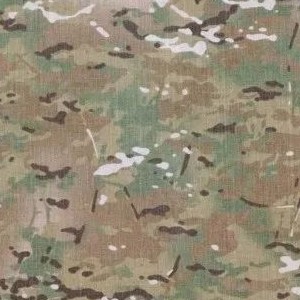
For example, Earth Federation Camouflage MultiCam (not counting the gradient is 5 colors)
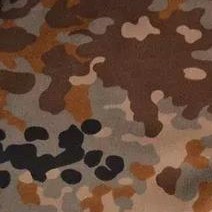
For example,Malaysian BOMBA camouflage
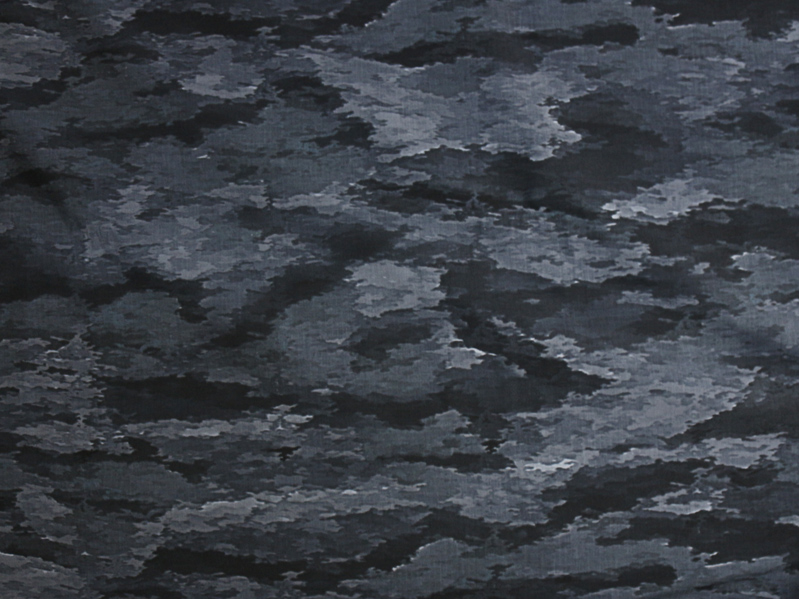
For example, ATACS-LE is one of the few camouflage patterns with a black background.
Camouflage patterns include, but are not limited to, the following patterns in accordance with their geometric characteristics:
1.Spots, various types of dots or similar dot patterns, such as Durban, raindrops.
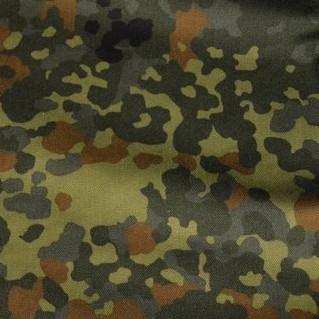
2.Brushes are named after the same effect as painting with a paint brush.
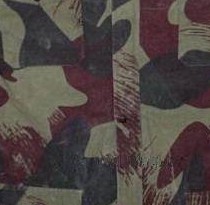
3.The abstract category has the same lines as post-modern abstract art paintings, mainly arc lines and sharp character blocks.
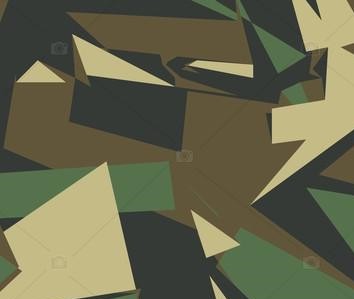
4.Digital type, the basic image element is a small square color block.、
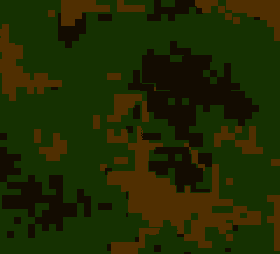
5.Bionics, roughly divided into leaves, tabby, feathers, branches, etc. are mainly imitating patterns, this type of camouflage is not commonly used military, mainly found in hunting.
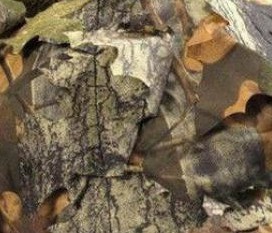
6.Geometry, represented by Swedish camouflage, is characterized by clear lines, sharp edges and clear boundaries.
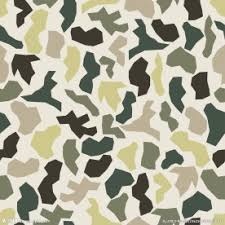
China's new camouflage is also a camouflage designed with a compound idea. It looks very much like some foreign camouflage, but it is not.
At the same time, camouflage began to separate from clothing, and camouflage had its own name and model. The design itself has also become a product, and its application area is becoming more and more widespread.