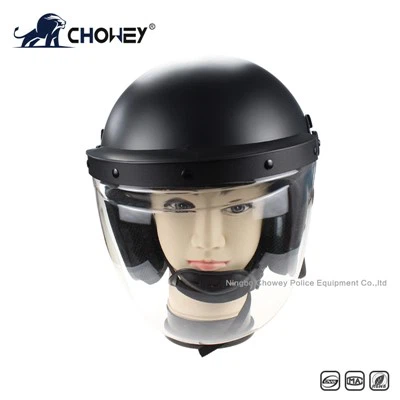
If you’ve ever watched footage of crowd control—protests getting tense, officers stepping in to keep order—you’ve probably noticed those bulky, matte helmets on the front lines. Those aren’t just for show, and the secret to how they protect so well? The shock-absorbing layer inside. I’ve worked with anti-riot helmets for years now, as a supplier, and I’ve talked to dozens of officers who’ve used our gear to tell me exactly what works and what doesn’t. Most people don’t stop to think about that squishy, unassuming part between the hard outer shell and the wearer’s head, but it’s the whole reason these helmets do their job. Let me break it down like I would to a new trainee, no fancy jargon, just straight talk.
First, let’s get one thing straight: anti-riot gear isn’t designed to stop a bullet. It’s built to handle the stuff you’d actually face at a protest or a riot—rocks thrown from crowds, blunt force from batons, accidental head bumps against barriers, even the occasional kick or elbow. The worst part of any of these impacts isn’t just the force itself; it’s how that force transfers to your skull and brain. Your brain floats in cerebrospinal fluid, right? So if something hits your head hard and fast, that sudden jolt can make your brain bang against the inside of your skull, which causes concussions, bruising, or worse. The shock-absorbing layer’s entire job is to slow that impact down, spread it out, and turn that sharp, sudden force into something gentle enough that your brain doesn’t get damaged.
Now, what is that layer actually made of? It’s not just foam from your couch, that’s for sure. Most good anti-riot helmets use one of two main types of shock-absorbing materials: expanded polystyrene (EPS) foam, or more advanced expanded polypropylene (EPP) foam. I’ve seen both work, but EPP is the better choice for heavy impacts, which is why we use it in most of our top-tier models. Here’s how it works on a molecular level—think of those foam packing peanuts you get when you order a big appliance. EPS is softer, it crushes easy, so it works for smaller impacts. EPP is stiffer, it’s basically millions of tiny plastic bubbles fused together. When a rock hits your helmet, those bubbles don’t just flatten right away—they deform slowly, over a few milliseconds, which is all the time you need to keep the force from reaching your head.
Wait, let’s do the math real quick, no calculus, promise. If a rock is thrown at 20 miles an hour, that’s a certain amount of force. If that force hits a hard plastic shell straight to your skull, you’re taking 100% of that force. If it hits the shell, then goes through a thin foam layer, you might take 70% of that. But if it goes through a thick, properly designed shock-absorbing layer? You’re looking at 15% or less of that force. That’s the difference between a bad headache and a trip to the ER, or worse. That’s why we don’t cut corners on that layer—we’ve had officers tell us a rock hit their helmet and they didn’t even get a bump, and that’s exactly what we’re going for.


A lot of people ask me why the shock-absorbing layer isn’t thicker, or softer. The answer is balance. If it’s too soft, it won’t handle hard impacts like baton strikes. If it’s too thick, the helmet gets bulky, heavy, and hard to wear for 12-hour shifts, which is standard for officers during big events. We test all our helmets in-house, and we work directly with riot control units to adjust that layer’s thickness and density to fit what they actually need. For example, our Police Anti Riot Control Helmet uses a 20mm EPP layer that’s just firm enough to take baton blows, but soft enough to cushion rock impacts and comfortable enough to wear all day. You can check that one out if you want more details—it’s the go-to for most municipal police departments in the region we serve.
Another big part of how this layer works is its shape and how it’s attached to the outer shell. It’s not just a flat block of foam glued to the inside. Most good helmets have the shock-absorbing layer cut into the exact curve of the human head, with small gaps between the layer and the outer shell in some places. When an impact hits at an angle, that gap lets the layer move a tiny bit instead of just absorbing the force straight on. Think of it like a car’s airbag—wait, no, more like a car’s crumple zone. Cars are designed to have parts of the front crumple in a crash, instead of being rigid, so that slows the impact down for the passengers. Same idea here. The shock-absorbing layer is like the helmet’s crumple zone, and that slight movement is what makes it work better than a solid block of foam.
I’ve also noticed a lot of cheaper knock-off helmets on the market that use cheap EPS foam, or even just thick fabric, instead of actual EPP or high-density foam. Those are a hazard, honestly. I’ve tested a knock-off helmet that had a foam layer that crumpled instantly when I hit it with a baton—hardly any force absorbed, just a loud bang. We always tell customers to skip the cheap stuff, because when you’re in the middle of a volatile situation, your helmet is the only thing standing between your head and serious injury. If you’re looking for a durable, reliable option that’s built to last and protect, our High Quality Anti Riot Helmet with Face Shield is a solid pick. That one uses a reinforced EPP layer and has a polycarbonate face shield, so it covers more of your upper body too—perfect for long shifts or events with lots of projectiles.
Wait, let’s talk about something not a lot of people bring up: how the layer handles repeated impacts. Because in a riot, you don’t get hit once—you might get kicked, bumped, or hit with a rock several times. Some foam layers wear out after one or two hard hits, right? The bubbles break, the material compacts, and it can’t absorb force anymore. That’s a problem. Good EPP foam, though, is designed to bounce back after impacts. It compresses when you take a hit, then springs back to its original shape for the next one. We test our helmets by simulating 10 to 15 hard impacts, and the shock-absorbing layer still retains 90% of its original cushioning ability. That’s why our Military Anti Riot Control Helmet is popular—military units often need helmets that hold up through multiple impacts during extended deployments or drills, and that EPP layer delivers.
Another thing: ventilation. Officers working in riots in the summer can sweat through a normal uniform in an hour, so a helmet that’s too hot is a distraction at best, dangerous at worst. The shock-absorbing layer is designed with small holes or channels in it, so air can flow through. Those holes don’t hurt the impact protection, either—they’re placed in areas that don’t get hit by most projectiles, like the top or back of the helmet. Our New Design Anti Riot Control Helmet has a vented EPP layer that’s been tested to stay cool 20% better than older models, according to feedback from officers who use it in hot climates. That small detail makes a huge difference when you’re wearing a heavy helmet and body armor for 10 hours straight.
I’ve had some officers ask me if we could make the shock-absorbing layer even thicker, and yeah, we could—but it would make the helmet too heavy. The average good anti-riot helmet is around 1.5 to 2 pounds, which is light enough to wear all day without straining your neck. If we added another half-inch of foam, that would add half a pound, and after 8 hours of walking and running, that extra weight adds up. We worked with physical therapists to design our layers to be as effective as possible without adding unnecessary weight, and that’s a big part of why our helmets are trusted by so many units. The Military Fast Combat Army Safety Defense Tactical Helmet takes that balance a step further—it’s lighter than standard riot helmets, but still has a high-performance EPP layer that meets military impact standards, so it works for both riot control and tactical operations.
Let me clear up a common myth, too: this layer doesn’t just work for blunt impacts. It also helps with minor blunt force trauma, which is what causes most concussions. When you get hit hard enough, even without a cut or a bruise, the brain can get jostled. The shock-absorbing layer spreads the force over a larger area of the head, and slows the impact down just enough that the brain doesn’t hit the skull walls hard. That’s why concussions are way less common among officers wearing properly equipped helmets than people who don’t wear them during protests. I’ve heard so many stories from officers who said they got hit on the head during a protest, felt fine immediately, but would have probably had a bad concussion if their helmet’s shock-absorbing layer hadn’t done its job.
So, to wrap this up (no pun intended, but I’ll take it): the shock-absorbing layer in an anti-riot helmet isn’t some fancy tech only scientists understand. It’s a carefully designed piece of the helmet that uses high-density foam to slow and spread impact force, bounce back for repeated use, balance protection with comfort and weight, and fit the specific needs of the people wearing it. It’s the unsung hero of the whole helmet—you don’t see it, but you definitely notice when it works.
If you’re a law enforcement agency, military unit, or emergency response team looking for reliable anti-riot gear that’s built to protect your team, we’ve got options that fit every need and budget. We work closely with groups to test gear, adjust designs, and make sure it’s exactly what they need for their specific operations. Whether you need a standard model for crowd control, a lightweight option for tactical use, or one with a face shield for extra protection, we’ve got you covered. Reach out to us to talk through your requirements and get a custom quote for your team.
References
- National Institute for Occupational Safety and Health (NIOSH). (2020). Head Protection for Emergency Responders: A Guide to Selection and Use.
- American Society for Testing and Materials (ASTM). (2019). Standard Specification for Anti-Riot Helmets.
- Journal of Safety Research. (2021). Impact Attenuation Performance of Expanded Polypropylene Foam in Personal Protective Equipment.